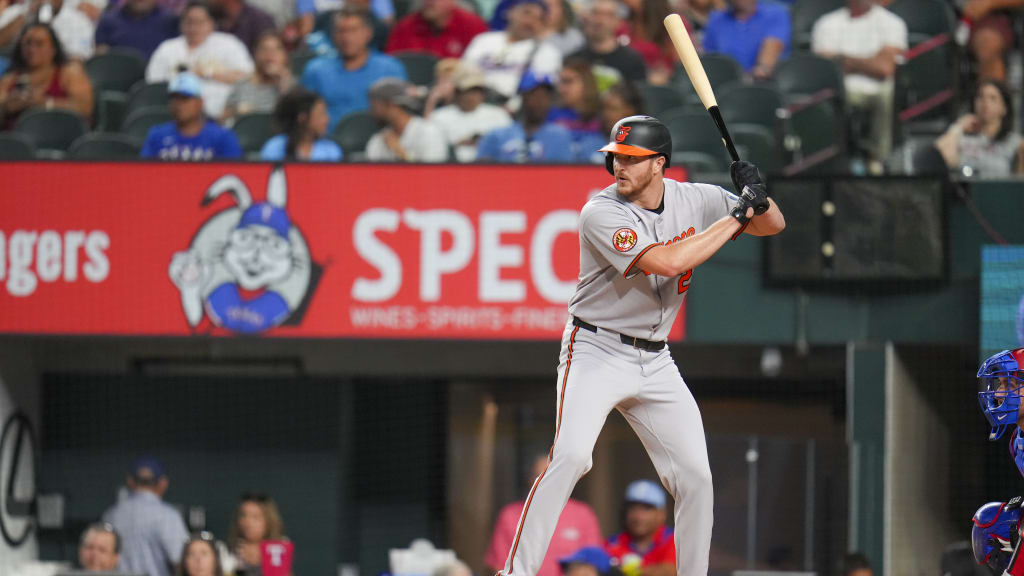
Sunday was a big day for all the members of the Trevor Rogers trade. In the morning Trevor Rogers threw 6.1 shutout innings in a low scoring win against the Braves, in the afternoon Connor Norby went 0-3 and in the evening it was announced that Kyle Stowers had made the All Star team.
Stowers making the All Star team reignited discourse around last year’s Rogers for Norby and Stowers swap that was for the most part not positive for the Orioles. As I drank in my usual diet of national baseball media it seemed like most of the commentary boiled to more or less this composite quote:
“Bad look for the Orioles, they’re having a disappointing season and now it looks like they got fleeced by the Marlins at last year’s trade deadline.”
I will say there were at least a few shows that mentioned that Trevor Rogers had been pitching well recently so it wasn’t a totally unrelenting beatdown on the Orioles but sitting at 40-49 at the time, dead last in the division, makes it difficult to defend the trade.
Difficult, but not impossible.
I don’t blame any shows that cover baseball nationally for not having an especially nuanced take on the Trevor Rogers trade but when you seek out the opinions of people who follow the Orioles more closely, whether that is beat writers, bloggers or just die hard fans online you’ll get a much wider variety of opinions on the deal.
These opinions will range from “total disaster” to “completely defensible” with plenty in between and both sides making valid points so today I am setting out to once and for all discover the correct opinion to have about this trade.
When you are the buying team in a deal where you are looking to acquire major league talent in exchange for prospects it is difficult to be the long term winner of the trade. Sellers are in a much more advantageous position in these negotiations, they are usually bad teams trading away players whose contracts will expire before the team is good again, so it is very rare that the selling team will look back and say “If only we’d had that pitcher for a few more months so he could give us 5 more starts after we’d been eliminated from the playoffs.”
On the other hand it is much more common that a team will trade away a prospect and that guy turns into a star and you look back and say “Man I wish we’d held onto him.”
Every year 10-12 teams will trade prospects for rental players that will only be on the team for the next 3 months and only 1 of those buyers will be able to unequivocally say it doesn’t matter what we traded away because we won the World Series.
That’s the reality of the situation. So when you are a buyer you need to go into the buying process with the conviction of:
Here is what we need to trade for.
Here is what we are willing to trade.
If a team has what we want and will trade it for what we’re willing to trade away then we’re going to feel good about this trade no matter what.
As an example the Orioles traded 2 prospects and a pick for Corbin Burnes. Burnes then gave the Orioles 32 starts, put up a 2.92 ERA, accrued 3.5 WAR, finished top 5 in Cy Young voting, pitched 8 innings of 1 run ball in his only playoff start and left in free agency. There is a good chance that between the 12 years of control that the Brewers have with Ortiz and Hall that they will put up a lot more than 3.5 WAR. One of them might make an All Star team or win a Gold Glove but it doesn’t matter because the Orioles already got everything they could have asked for from that trade. There is nothing Joey Ortiz and DL Hall can do that would make trading them for 1 year of Corbin Burnes the wrong move.
All this to say that when you are evaluating a trade it’s not as simple as asking which team acquired more WAR in the trade package because buyers and sellers are playing different games. The Orioles got more WAR from the Manny Machado trade than the Dodgers, do you think the Dodgers regret trading for Manny Machado?
Anyway most of what I’ve said so far has been generalized so let’s get into the specifics of the Trevor Rogers trade.
I want to try to be as fair as possible so rather than look at what has happened since the trade let’s go back to July of 2024 and see where the Orioles were at.
On July 31st of 2024 the Orioles were in first place in the AL East by a half game. They had just had their first losing month since 2022. Their rotation was Corbin Burnes, Grayson Rodriguez, Dean Kremer, Albert Suarez and Cade Povich.
They traded for Zach Eflin which gave them a top 3 of Burnes, Eflin and Rodriguez which was pretty solid compared to other top trios in the AL at the time but the Orioles were not done looking for rotation depth.
Let’s talk about who the Orioles traded away in the Rogers deal.
At that point in time Kyle Stowers was on the Norfolk Tides. He had been up and down a couple times that season but in 19 Major League games was slashing .306/.297/.500 (Now there’s a slash line that will make you do a double take). Good 19 game sample aside, a 26 year old in triple A with a career negative WAR is not the hottest commodity on the trade market.
Connor Norby was on the major league team at the time of the trade. He had only played in 9 games at the Major League level and had experienced some pretty standard rookie growing pains striking out 12 times in 32 plate appearances. However he was definitely showing some signs of life at the plate hitting 2 homers in that same stretch. Norby still had prospect eligibility and was what I would call a fringe top 100 prospect so at the time of the trade he was seen as the real prize for the Marlins.
Process-wise I would say the best part of this trade was that the Orioles looked at their roster and said we want Jackson Holliday at second base more than Connor Norby and we want Colton Cowser and Heston Kjerstad in the corner outfield more than Kyle Stowers. They made a decision. Time will tell if it was the best decision but at a certain point choosing right or wrong is better than refusing to choose and allowing there to be a toxic log jam where development is stunted and nobody is happy with their playing time.
As far as my opinion on those decisions, I think the Holliday over Norby decision was fairly obvious and the correct move. The other decision is bit more controversial. With the benefit of hindsight we now know that Stowers would go on to be an All Star and Kjerstad would be demoted back to Norfolk. You could quibble over trading Stowers over Kjerstad but if you look back to 2024 Kjerstad was a top 20 prospect in baseball and before he was beaned in the head by Clay Holmes he was slashing .313/.411/.542 and looked like he was breaking out. So I think picking Kjerstad over Stowers was a very understandable decision at the time.
The other problem with saying the O’s shouldn’t have traded Stowers is that there is no guarantee that if he stays in Baltimore he has this same breakout. Getting yo yo’d between the Majors and Triple A is hard and stressful and it’s not like the Orioles would have cleared space for him to get everyday playing time in the offseason like the Marlins did. They couldn’t even be bothered to do that for Mayo or Kjerstad. If Stowers had stayed he would have been stuck in a corner outfield timeshare with Tyler O’Neil where he’d get stuck facing only righties even though he’s a reverse splits guy.
With the Marlins he got to play the rest of 2024 in the bigs and even though he stunk he came into spring training with a starting position on the team and got lots of at bats and opportunities and he has rewarded them for giving him that opportunity.
The Marlins are at the beginning of a rebuild and the Orioles are supposed to be in the beginning of a contention window and contenders don’t have the luxury of just letting their entire roster stink it up until they figure it out. So it makes sense that the Orioles didn’t have the at bats to give to Stowers to allow him to develop. Ideally I’d be saying this and the Orioles would have a better record than the Marlins but that’s just not the case.
So I have no issue with those 2 players being the ones that the Orioles traded, even though Stowers is an all star and Norby could also end up being a good player. When you have more good players than can fit on the roster you’re going to have trade away good players
The issue, if there is one, with this trade is who Norby and Stowers were traded for.
Trevor Rogers made 21 starts for the Marlins at a 4.53 ERA before the Orioles traded for him. His previous 2 seasons had been marred with injuries but before that he was a deserving All Star in his rookie season pitching 133 innings at a 2.65 ERA and putting up 3.5 WAR. So it seemed like the Orioles were trading for a middle to back of the rotation arm that had some upside. Perhaps the biggest selling point for the O’s was the 2.5 years of control that they were getting with Rogers, it was clear that across all the Orioles’ trades there was a focus on acquiring players that would be back for the 2025 season and beyond.
You can go back and read my full initial reaction to the trade here, but the TLDR is that I was surprised that it cost Norby and Stowers to get Rogers. I used the phrase “I don’t think Trevor Rogers is very good” but I was optimistic that he could be an upgrade over Cade Povich for the rest of 2024 and that if he had a healthy offseason he could return to his 2021 form again.
What actually happened was Rogers was not an upgrade over Povich, had to be sent down to triple A for the rest of 2024, got hurt in the offseason and wasn’t able to have a normal spring training and didn’t make his first start in 2025 until the team was 17 games under .500.
It went almost as poorly as it could have possibly gone for the first 8 months following the trade.
Now since he’s gotten back to the big league roster he’s been very very good. 5 starts with a 1.57 ERA, a 2.80 FIP and is already second on the team in pitcher WAR despite not being in the top ten in innings pitched. These 5 starts aren’t quite enough for me to declare this a win-win trade but it does serve to tip the balance back from total heist to maybe just an overpay.
Anyway when you are judging the results this trade I think you need to look at what the Orioles were hoping to get from Rogers.
- Help competing to the 1 seed and division title in 2024, possibly to pitch in the playoffs
Did they get it: No
- A regular part of the rotation in 2025 to help compete for a playoff spot
Did they get it: No. This one is a bit tricky because there is enough time in the season that Trevor Rogers might set a career high for innings pitched but by the time he was able to start contributing to the team the damage was done and the team was well out of contention. (as a note I wrote most of this before the Orioles swept the Mets in a double header so things were feeling kind of bleak but I’m going to leave it even though I’m not in the same “it’s over” headspace as I was originally)
- A regular part of the rotation in 2026 to help compete for a playoff spot
Did they get it: TBD
So when you are looking at the just the results of the trade you have no choice but to say that this trade has been a massive failure for the Orioles so far.
It’s not out of the realm of possibility that Rogers could be good enough in 2026 to make you feel good about the trade but when you pay a premium to get a guy with 2.5 years of control and he only really helps you contend during 1 of those years that is disappointing even if in that last year he’s really good.
So Rogers has his work cut out for him to try to stop this trade from going down as very lopsided in favor of the Marlins.
BUT, those are just the results. What about the process?
As I’ve mentioned earlier in this blog I can see what the Orioles were trying to do with this trade. At the deadline lots of pitchers with expiring contracts get traded but it is pretty rare to see pitchers with 2+ years of control get moved.
So if you decided your number 1 priority was multiple years of control then your pool of trade targets gets a lot smaller and if you’re not willing to put a top prospect like Kjerstad or Mayo in the deal then the quality of pitchers in that pool goes down substantially.
When you look at Trevor Rogers at the time of the trade you are looking at getting 2.5 years of control over a mid rotation starter that has all star upside. I said earlier that things went about as poorly as possible for Rogers after being traded but if you’re making the trade without the benefit of hindsight there’s no way you would assume that he would be as bad as he turned out to be for the rest of 2024 and you couldn’t predict his injury in 2025
If you look at Eflin and Rogers’ stats at the time of the trade they are pretty similar. Both had ERAs in the 4s, FIP liked Eflin more, Rogers was better by WAR and look how good the Elfin deal was up until his last couple starts.
Eflin gave the Orioles 9 really good starts to finish the 2024 season. If Rogers had been able to give the Orioles 9 starts that were as good as his last 9 starts in Miami (48 innings, 3.17 ERA, 4.24 FIP) he would have been a real asset to the 2024 Orioles and they might have even won the division. When you’re trading for a pitcher mid-season I think it is fair to expect that they will be more or less the same guy they’ve been in the 2 months leading up to the trade but that’s just not what happened for Rogers.
So I don’t totally hate the process but it wasn’t perfect here is what I would have liked the Orioles to have done differently
If Trevor Rogers was the best you could do with Stowers and Norby combined, I would have liked for the Orioles to dream bigger and include Mayo or Kjerstad in the package and go after someone that wasn’t on the market for most teams. The Red Sox got Garrett Crochet in the offseason and the best prospect they gave up was Kyle Teel. Coby Mayo is a better prospect than Kyle Teel. I feel like Mayo, Norby, Stowers and take your pick from some of the lower level prospects could have gotten that deal done at the deadline last year. I know Crochet and his agent were doing some funny business about pitching in the playoffs but I would have done it anyway.
Would the Mariners have traded one of their pitchers for a Heston Kjerstad, Connor Norby and Kyle Stowers package back when Kjerstad’s OPS was in the .900s?
We’ll never know.
I also would like to have gotten more upside for how much of an injury risk that Trevor Rogers presents. The guy’s career high in innings is 133. He’s going to reach his final year of arbitration without pitching a full starters workload. This kind of injury risk merits a significant discount in a trade.
It especially pains me that a more ideal injury to upside pitcher was also on the Marlins last season in Jesus Luzardo and the Phillies ended up swiping him for less than what the Orioles gave up for Rogers in the offseason. If the Rogers trade was always about the future then I would have preferred Luzardo.
Even though there were mistakes the Orioles front office had the right idea with this deal. Things going as bad as they did from August of 2024 to May of 2025 made it seem like they had completely whiffed on this trade but the way Rogers has pitched since rejoining the rotation has shown what the Orioles were not crazy for thinking he was worth trading 2 potentially good players for and there is still time for him to continue to tip the scales of this trade back in his favor.
Even if Rogers ends up getting hurt or regresses badly it doesn’t change the fact that this is still the kind of trade the Orioles need to keep making. Keep trading blocked prospects for controllable pitching. Do it over and over again until you have a rotation that is worthy of a contender. Do it every year at the deadline if you think you have a chance to win the World Series. I’d rather live through a Trevor Rogers trade every year than see the Orioles turtle and go into asset hoarding mode.
The Orioles front office needs to learn from their mistakes and try again.
 The Dishwasher
Leave a comment